Caring for loved ones at home
Caring for a loved one with cognitive disorders at home presents many challenges: behavioural disorders, medication refusal, sleep disorders and apathy. These behaviours, which often go unidentified, require particular vigilance from the carer. It is essential to consult a doctor to assess the situation and rule out underlying medical causes. Adapting the environment, maintaining clear and reassuring communication and coordinating care with geriatricians, psychiatrists and other professionals all help support loved ones’ independence and well-being. Physical and cognitive rehabilitation at home also help to maintain independence.
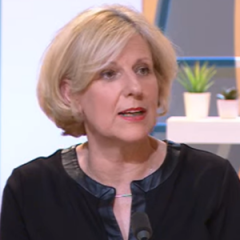 Doctor Elisabeth Kruczek
Text transcription
How can I provide support at home to a loved one who has cognitive disorders? The diagnosis has not yet been made, but there are behaviour disorders, issues with daily life.
These may be major or minor, but you are starting to ask yourself some serious questions. They refuse to go out, they refuse to take their medication, and you ask yourself: “how can I provide the right support? How can I understand and how can I do the best I can with what is happening to us?”
The various disorders that will present themselves range from the quietest: apathy, depression, with agitation which won’t actually be very quiet, to hallucinations which can be strange, and sleep disorders which will tire you out because you won’t be able to sleep at night. What is a behaviour disorder? Behaviour is a set of observable reactions due to an action, or an internal sensation, how you feel, or an external situation, what is happening outside. And in general our reactions are appropriate.
But, in behaviour disorders, there are totally inappropriate reactions with aggressiveness, apathy, reactions to eating, sleeping, sphincter behaviour, and sometimes even sexual behaviour, with of course interference from previous psychiatric disorders and memory disorders, since the person will have difficulty remembering what happened before or what used to happen in a given situation.
The disorders are often not identified because the patient won’t complain about them, in particular apathy, depression, and then for the normal population, for caregivers, for loved ones, it is normal to be a little reclusive when you’re old, it’s normal to be a little depressed when you realise you’re getting older. Caregivers don’t often talk about it because they are ashamed or they feel guilty. How can you say that the whole family is coming to eat at your house, that the table is set for ten when there is nobody there, or the bed is invaded by a man who wants to sleep with his wife and then sometimes, there is also inappropriate sexual behaviour, inappropriate requests, insults.
You should know that to highlight this type of disorder, it takes around 20 minutes. Consultations are often short, and doctors will not ask about this. Caregivers and workers add their voices to the rest of the population by trivialising ageing and then often, the problem of memory disorders, even though it affects a quarter of the population over 80 years old, are not taken into account and we don’t realise that a disease is setting in which affects how the person’s daily life is organised. Later, several behaviour disorders will be intertwined, there will be illnesses which aren’t diagnosed because they are not explained, there will be brutal reactions to an environment or to a constraint, and then, of course, there will be psychiatric disorders which evolve and which must always be examined, treated.
And then, of course, there are the treatments which will mask external signs and that is a real struggle. What should be done? You should talk to your doctor, have the courage to go and see your doctor to talk about your daily life and the difficulties you are having, and they will do a complete clinical examination of the elderly person to detect any sign of infection, fecal impaction, that’s very important.
Dehydration and fecal impaction go together so it is very important to suggest that they drink more, to look of course at these chronic pathologies which decompensate, whether that means hypertension when the patient takes too much medication, psychiatric diseases, and of course we must always take care to reduce deafferentation to allow us to see, hear and understand what the person is telling you. And then, of course, sometimes, when there are behaviour disorders like that, we tend to have the elderly person travel to the home of one of the children or the other child, and they will sometimes have difficulty adapting to a new environment.
And then, of course, you have to consider drug overdose and drug interactions because there are often too many drugs. -Quite rarely, there is mistreatment, whether from the patient or the person being cared for, but we still have to be attentive, and then, of course, we always have to take time, modify the environment before implementing medical treatment. What should be done? Adapt the environment, try to have a safe, lit space, without carpets, also avoid isolation, make the space pleasant, accessible, and then help the person to pace themselves during the day, speak to them normally, don’t use “we” instead of “you”, and then afterwards, you need to check that they have understood correctly, with a reformulation, a reassurance: “I am here for you, I’m here to help you”, and when words disappear, non-verbal contact.
The diagnosis has been made, and it allows us to begin understanding things better and there needs to be very regular monitoring with appropriate, overall support: doctor, geriatrician, psychiatrist. We will regularly evaluate the clinical situation, we have very specific tests on autonomy, walking, nutrition and we will pay very, very close attention all the time to hydration, depression, making sure the right treatment is given, improving hearing and vision.
And then we will have to ensure that the family is supported in the most suitable living space possible, but depending on physical resources, caregivers, the main caregiver and financial resources. It takes a long time and constant adaptation, and adjustment is required, assistance measures are put in place gradually.
A gradual assistance plan will be carried out and this is something that needs to be managed. We will focus on nursing care with the preparation of medication because sometimes patients refuse to take their medication. Your loved one will tell you “I won’t take that”, but with the nurse they will take it.
Then comes weight, hydration, and the treatment needs to be adapted constantly, there is an adage which says “neuroleptic for a day, neuroleptic forever.” That’s wrong. Situations must constantly be reassessed, and in France this is covered by social insurance. And then there is the option of speech therapy rehabilitation and exercises with physiotherapists for walking, balance, reassurance, often, after a fall, the person has a lot of difficulty walking again so they will have to be taught how to do that.
We have teams who go to homes and who provide tailor-made services, with end-of-care recommendations that are tailored to help keep the patients at home. All this care is coordinated, and that is very important, we have to talk to each other, we have to keep track.
Key message
Structured, secure and coordinated support at home helps maintain the independence and well-being of people with cognitive disorders while supporting family carers.
Population ageing means Alzheimer’s disease and related conditions are at the heart of major public health issues. It currently affects a million people in France, but that figure rises to nearly three million if we include relatives. It’s a tsunami that society has to be prepared for.
Other videos in the series