
Opinion – Task delegation, remote monitoring and e-health: rethinking the system without judgement
Faced with a strained healthcare system, task delegation, remote monitoring, and e-health are no longer marginal innovations but organizational necessities. Professor Antoine Piau calls for a rethinking of our practices to build a truly preventive and collaborative care pathway.
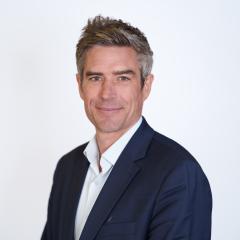 Professor Antoine Piau
A factual observation
The debate around delegating tasks comes up regularly, sometimes vigorously. Some healthcare professionals’ unions are still opposed to it, in the name of patient safety. Yet it is now clear – and there is no judgement here – that our health system could no longer function without certain forms of delegation.
The best-known example is the 15 emergency number: when you call, you don’t speak to a resuscitator or emergency doctor, but access a triage platform staffed by non-medical professionals. Without this prioritisation of tasks, the system would collapse. Many specialist areas already delegate: orthoptists in ophthalmology, medical assistants in outpatient surgery, advanced practice nurses, nursing assistants trained in the ICOPE programme, and so on. These long-established practices show that delegation is possible and can be done safely.
Remote monitoring, the cornerstone of prevention
t is objectively clear that under the current health system, doctors can only see their patients for a few minutes every three months, six months or more. This reality does not reflect a lack of attention, but is the result of several structural factors: the population requiring medical care is growing, care is organised in a way that is struggling to absorb the growing demand and a multilayered administrative system takes up a portion of the time allotted to medical care. These are all elements that make close monitoring difficult.
In addition, medical telemonitoring and remote monitoring of large healthy cohorts (necessary if we really want to take a preventative approach, thus acting upstream of diseases and loss of function) changes the game radically. At IHU HealthAge in Toulouse, for example, tens of thousands of patients are monitored remotely through a simple mobile app. The digital tool isn’t what is revolutionary – a form would suffice. What is decisive is the underlying organisation: a collaborative platform, alert algorithms and above all professionals trained in task delegation to monitor and interpret these alerts on a daily basis.
The core innovation doesn’t lie in the application itself, but in the new professions, training and funding necessary to ensure effective and sustainable monitoring.
Time to stop fetishising technology
Since Covid, technology has been perceived as the miracle solution, from videoconferencing and apps to artificial intelligence. But these tools are often just sticking plasters placed on a system in crisis. Real innovation must take place at the organisational level: rethinking care pathways, streamlining exchanges and enabling effective interprofessional cooperation. We can no longer be satisfied with a curative system of organ-focused medicine, which is effective but takes place too far downstream, after diseases are diagnosed and become more complex (and which monopolises 97% of funding). But changing the paradigm also means making painful financial trade-offs. Are we ready?
Tele-expertise: working better together
Today, doctors are interrupted on average every seven minutes by SMS and WhatsApp messages, insecure emails and the like. This results in the equivalent of every hospital doctor losing an average of one hour of work per day. The widespread, secure implementation of tele-expertise makes it possible to:
- Restore time for useful medical tasks,
- Reduce burnout,
- Correctly invoice for work that is currently carried out for free,
- Offer remote expert advice to patients who do not have local access to equivalent expertise through a local doctor.
What about artificial intelligence?
Yes, AI has its place, especially to deal with the massive volumes of data generated by prevention and remote monitoring. But it must never be a black box. Professionals must retain control over algorithms’ configuration and interpretation, because medical responsibility lies entirely with them.
Key takeaways
Task delegation, remote monitoring and tele-expertise are not merely options: they are prerequisites for our health system to become truly preventative, personalised and effective. Technology does not replace humans; it frees up time for professionals to focus on what really matters.
But this requires us to overcome cultural, corporate and financial obstacles and support the transformation with new training, new professions and tailored financial decisions. This is the only way in which digital health can fulfil its promise.