
Addictology: initial results of post-hospitalisation digital follow-up
Presented at the 2026 Albatros Congress, this initial overview describes a pathway combining hospitalisation at the Inicea Val Pyrène clinic and personalised digital follow-up provided by EOS-care after discharge. The partnership aims to extend support for patients with alcohol use disorder and help prevent relapses. The first descriptive data set shows continuing follow-up for some patients, lasting several months after their hospitalisation.

Poster Albatros 2026 | Parcours hybride en addictologie
PDF, FR, 0.45Mo
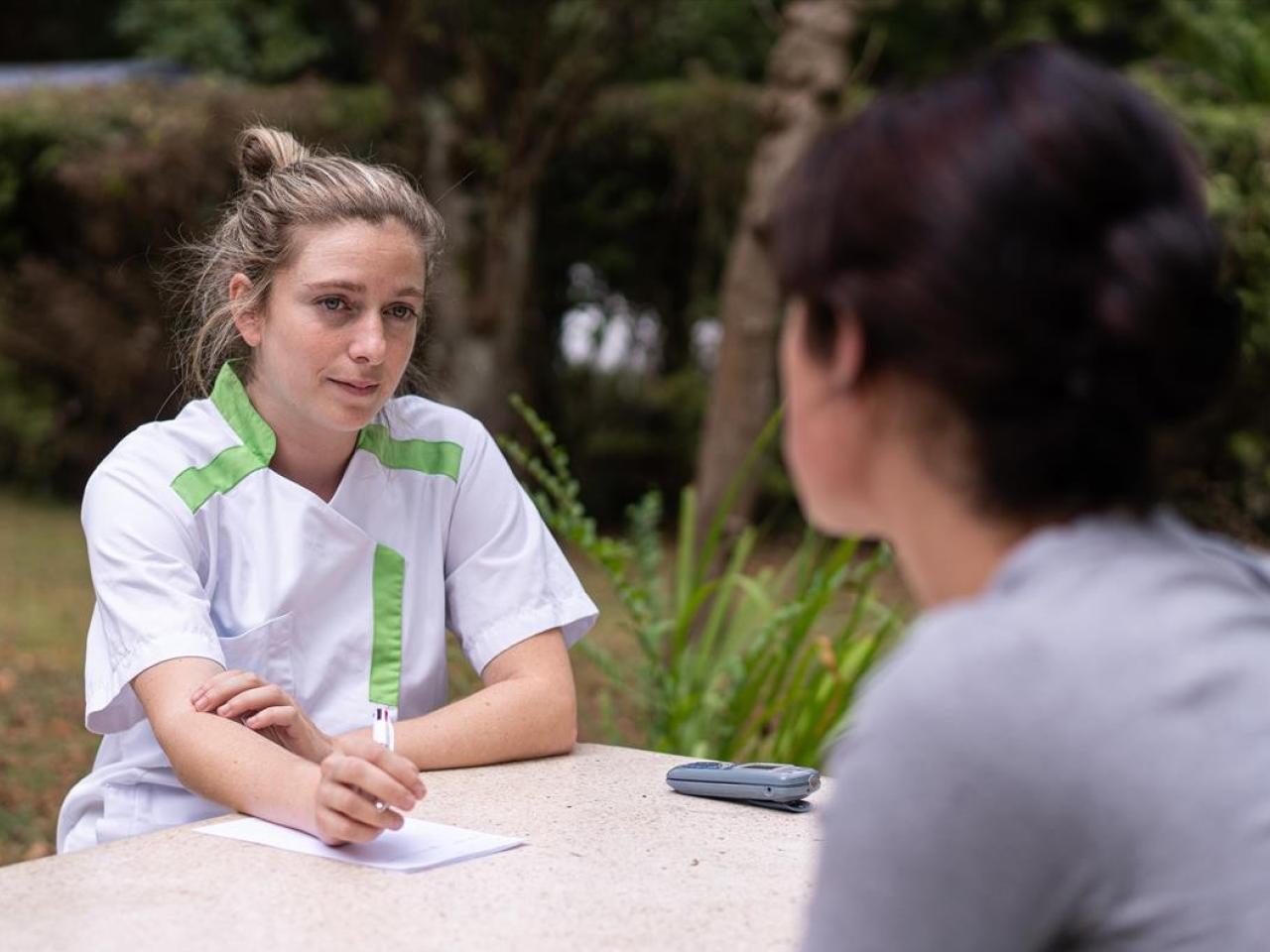
The post-hospitalisation period is an important step in the journey for patients with alcohol use disorder. Continuity of care and maintaining links with professionals can help prevent pathway breaks and relapses.
Since 2025, the Inicea Val Pyrène clinic and EOS-care have operated a coordinated pathway combining:
- hospitalisation in Val Pyrene, focusing in particular on adapted physical activity, therapeutic education and psychological, social and dietary care;
- the offer of digital follow-up after discharge, with the patient’s agreement, where assessment shows this approach to be relevant;
- remote support by a doctor-nurse pair;
- regular discussions between EOS-care and the prescribing team.
Through an app, patients can provide information about their psychological state, sleep and cravings, identify at-risk situations and access therapeutic education content. The pathway also gives patients the ability to request an urgent appointment if they encounter difficulties or have a relapse.
Initial results
Between June 2025 and February 2026, 36 patients were referred to EOS-care by the Inicea Val Pyrène clinic.
The data presented in the poster relates to patients who are active on the app and for whom information was available at the various periods in question.
The reported rates are as follows:
- 74% follow-up at two months;
- 72% no relapse at three months;
- 48% follow-up at six months;
- 45% no relapse at six months.
In the study, relapse was defined as the resumption of regular excessive consumption.
The assessable numbers and the numbers of patients corresponding to each of these percentages will have to be specified for a full interpretation of the results.
Lessons learned
The initial data shows that digital follow-up can be maintained several months after discharge for some referred patients.
The pathway extends links with a specialist team, offers remote support resources and helps organise regular coordination with the professionals at the Inicea Val Pyrène clinic.
Prescribers gave favourable feedback and described the system as adding few limitations to their practice. However, details of the number of prescribers interviewed and how feedback was gathered must nevertheless be specified.
Given the assessment’s descriptive nature, the absence of a control group and the numbers involved, the data is insufficient to directly attribute the observed rates of absence of relapse to digital follow-up. However, it does constitute a signal of the relevance of continuing and assessing the pathway.
Key takeaways
- 36 patients were referred by the Inicea Val Pyrène clinic to EOS-care.
- The process combines hospitalisation, personalised digital follow-up and coordination between professionals.
- Among patients with follow-up data, 74% continued with the support after two months.
- The poster reports 72% no relapse at three months, according to the definition adopted by the authors.
- The preliminary results must be interpreted in the light of the numbers that could actually be assessed at each stage and confirmed by an additional evaluation.
About
The initial assessment was carried out by the Inicea Val Pyrène clinic, EOS-care and Clariane France’s medical department. It was presented in the form of a poster at the 2026 Albatros Congress on addictology.